
Choosing a Plastic Bottle: Habit or Decision?

Most people do not choose a plastic bottle because they have carefully compared every packaging option. They choose it because it is there.
At an event, café, hotel, school, museum or public attraction, people are usually thinking about something much simpler:
“I’m thirsty.”, “What’s quick?”, “What can I carry?”, “What is right in front of me?”
That is why this question matters.
When someone picks up a plastic bottle, is it really a decision?
Or is it simply a habit?

The plastic bottle habit
Plastic bottles have been the default for grab-and-go hydration for years.
They are familiar.
They are visible.
They are easy to stock.
They are easy to hand out.
They are easy to repeat.
And repeated choices quickly start to feel normal.
That is how habits work. UCL research on habit formation found that behaviours become more automatic when they are repeated in a consistent context over time. The exact time varies depending on the person and behaviour, but the principle is simple: repeat something often enough in the same situation, and it starts to feel natural.
That is why customer behaviour is not only shaped by personal values.
It is also shaped by the environment around the customer.
The fridge layout.
The café counter.
The event kiosk.
The product is placed at eye level.
The drink was handed over by the staff.
All of these details influence what people choose.
People want better choices - but they still need them to be easy
This is where sustainability gets interesting.
Many people want to make better choices, but real life is busy.
A parent at a public attraction may be managing children, bags and the next activity.
A visitor at an outdoor event may just want something quick before the show starts.
A customer in a café may not want a sustainability explanation; they just want a drink.
In those moments, convenience usually wins. That does not mean people do not care.
It means the better choice has to work in the moment.
The Behavioural Insights Team’s EAST framework explains this well: if you want to encourage a behaviour, make it easy, attractive, social and timely.
For venues, that is a practical lesson.
If we want visitors to choose lower-plastic options, we cannot expect them to work harder.
The better choice needs to be:
easy to see
easy to pick up
easy for staff to manage
easy to understand
easy to dispose of responsibly
available at the right moment
That is how a different habit starts.
The UK behaviour gap
There is often a gap between what people intend to do and what happens in practice.
Recycling is a good example.
WRAP’s UK Plastics Pact 2024/25 report finds that 9 in 10 UK citizens recycle regularly, indicating that recycling is a normal habit for many households.
But WRAP’s Recycling Tracker also found that 82% of UK citizens put at least one non-recyclable item in their recycling.
That tells us something important.
People are not always careless. Often, they are confused, rushed, or dealing with systems that are not as simple as they look.
This matters for packaging.
If a business wants customers to make better choices, the answer is not just “educate them more”.
The answer is to design the choice better.
Make it clear.
Make it convenient.
Make it normal.
What businesses choose becomes what customers expect
Every venue creates defaults, whether it means to or not.
If plastic bottles are always the easiest option, they remain the habit.
But if a lower-plastic alternative is visible, available and easy to choose, the customer experience starts to shift.
This is where carton water becomes interesting.
Not because it is perfect. No packaging choice is.
But it can interrupt the automatic plastic bottle habit practically.
Carton water can sit naturally in cafés, kiosks, schools, public attractions, hotels and events. It is easy to hand out, easy for visitors to recognise, and visible enough to make the sustainability choice part of the experience.
Not a lecture.
Not a campaign.
Just a different default.
Kynren: making the better choice part of the experience
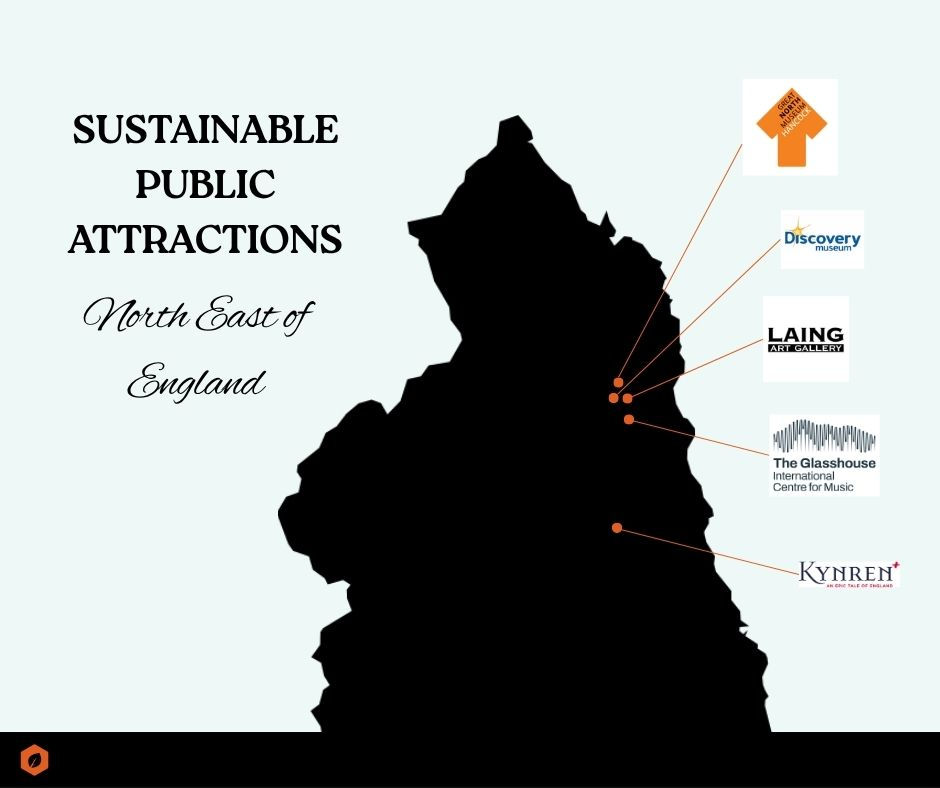
Kynren, the outdoor live-action show in Bishop Auckland, is a good example of this shift.
Through its partnership with Everdurance, Kynren introduced carton water as part of a wider move towards more sustainable practices across the event, including waste reduction and energy efficiency.
What makes this interesting is not only the packaging change.
It is the behaviour change behind it.
At a large visitor attraction, people are not there to study sustainability. They are there for the experience.
So the best sustainable choices are the ones that fit naturally into that experience.
No friction.
No pressure.
No extra effort.
Just a better option made easy to choose.
That is how new habits start to feel normal.
Why this matters now
Packaging is no longer just a back-of-house decision.
In the UK, packaging is becoming a bigger business issue. England already has bans and restrictions on several single-use plastic items, and the UK Government has confirmed that a Deposit Return Scheme for plastic bottles and cans is due to launch in October 2027.
For businesses, the direction is clear: Packaging choices are becoming more visible, more regulated and more closely linked to responsibility.
But the opportunity is not only compliance. It is customer experience.
Because packaging is one of the few sustainability decisions people physically interact with.
They hold it.
They carry it.
They leave it behind.
They notice it without always saying so.
So, habit or decision?
When a visitor chooses a plastic bottle, it may look like a decision. But often, it is simply the easiest habit available that gives businesses a real opportunity.
Make the better choice visible.
Make it easy.
Make it normal.
Customer habits are not built solely by what people believe. They are built by what businesses make simple to repeat.
So maybe the real question is not: “Would people choose something different?”
Maybe it is: Are we making the better choice easy enough?



Comments